Unlike the thunderous drama of East Africa’s wildebeest migration, Botswana’s zebra migration is guided by something softer but just as powerful: rain.
Each year, roughly 25,000 plains zebras begin a journey that stretches between the lush waterways of the Okavango Delta and the stark, open grasslands surrounding the Makgadikgadi Salt Pans.
When the summer rains arrive between November and March, they transform the pans from a blinding white desert into a fleeting Eden. Dormant grasses awaken. Water collects in shallow basins. Flamingos arrive in pink clouds. And the zebras, as if answering an ancient signal, begin to move south.
This migration is no small feat. Some herds travel nearly 500 kilometres in a remarkably direct line, making it one of the longest land migrations of any large mammal in Africa.
Yet, unlike the chaotic churn of other migrations, this one unfolds in fragments. Family groups drift across the landscape in staggered waves.
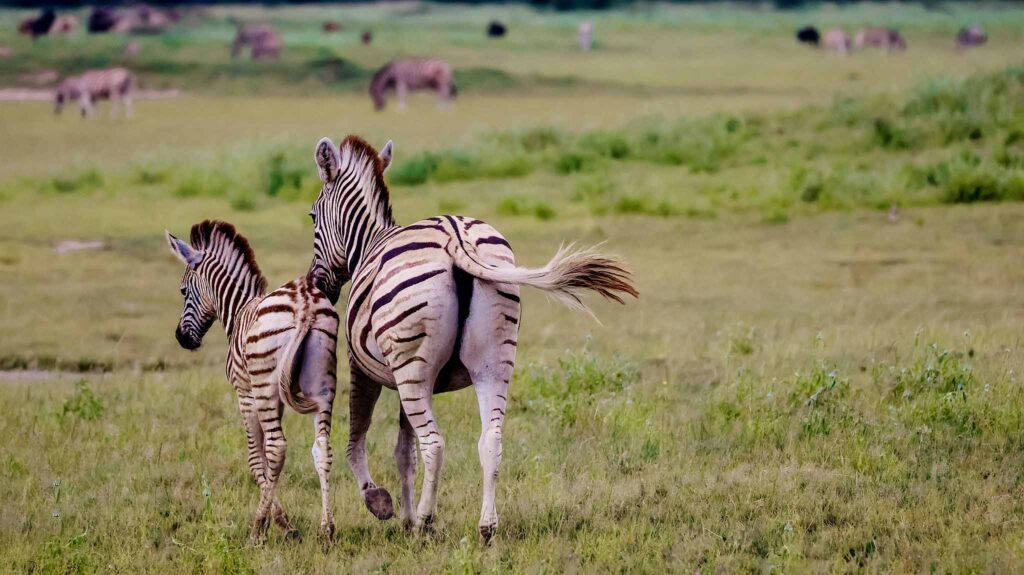
No single river crossing. No singular moment of spectacle. Just a slow choreography of survival.
To understand the migration, you have to understand the stage.
The Makgadikgadi Pans are the ghost of an ancient super-lake that once dominated much of southern Africa. Today, they are vast salt flats so expansive they seem to curve with the Earth itself.
Standing there feels like standing inside silence.

During the dry season, the pans are stark and skeletal, a chalk-white expanse broken only by baobab trees and the occasional mirage. But with the rains, the transformation is almost theatrical. Grasslands ripple into life. Wildlife returns. The emptiness fills.
And into this shifting world, the zebras arrive.
The zebras’ journey is a seasonal pendulum, swinging between abundance and necessity.
November to March (Wet Season): The zebras leave the northern floodplains and head south toward Nxai Pan and the Makgadikgadi region, drawn by fresh grasses.
March to April: This is when they move deeper into the salt pans, spreading across the landscape in scattered herds.
Dry Season (around September): As water sources shrink, the zebras cluster near the Boteti River, one of the few reliable lifelines.
November onward: They begin their return north, back toward the Okavango Delta, completing the cycle.
What makes this migration particularly fascinating is its precision. Researchers discovered it only recently, thanks to GPS tracking, revealing that these animals travel with astonishing consistency across years.

Even more curious: they often pass by perfectly good grazing and water sources along the way, seemingly committed to destinations only they understand.
Zebras may look like they’ve stepped out of a graphic designer’s dream, but their journey is anything but decorative.
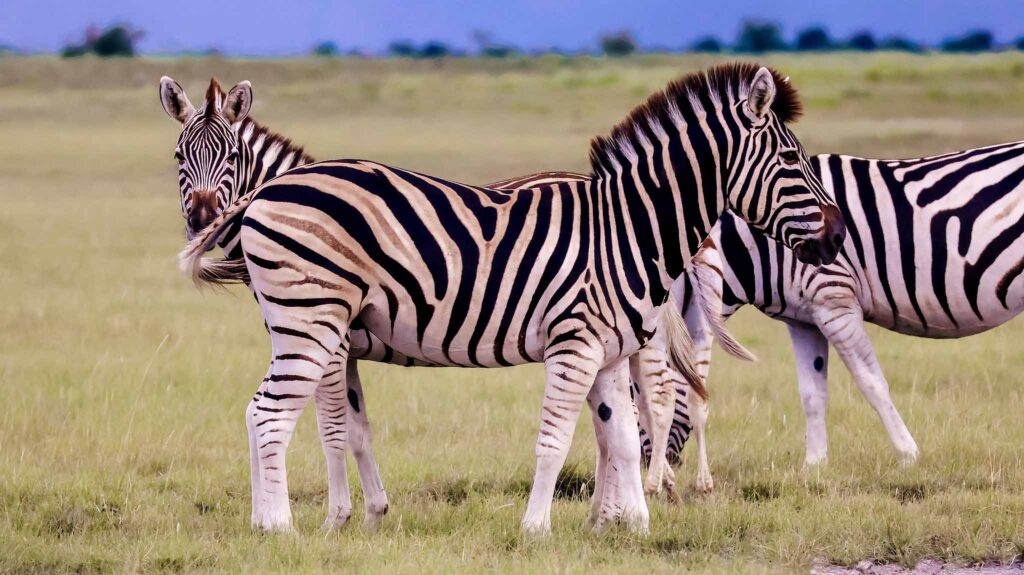
The migration is a gauntlet. As they move, predators shadow them. Lions, cheetahs, hyenas, and wild dogs track the herds, turning the pans into a living chessboard of pursuit and escape. There is hunger, exhaustion, and loss.
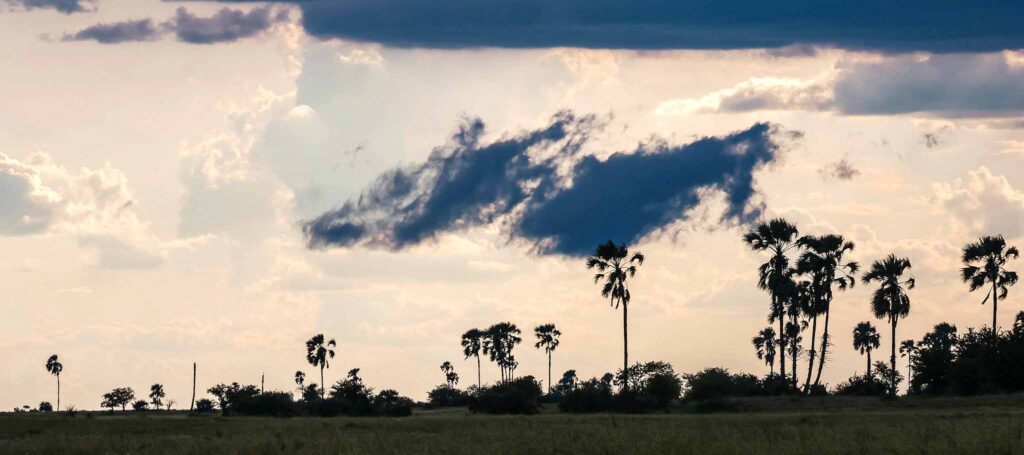
Not every zebra completes the journey.
But there is also resilience. Foals wobble alongside their mothers. Stallions stand guard. Herds merge and split like ink in water. And always, they move forward.
By the time I arrived at Jack’s Camp, the migration was already winding down.
This is the thing about Botswana’s zebra migration: it doesn’t announce itself with a grand finale.
From the camp, the pans stretched outward in every direction, pale and infinite. The air carried that dry, mineral scent unique to salt deserts. And then, in the distance, movement.
A line of zebras.
Not thousands. Not even hundreds. Just a small procession, their black-and-white stripes flickering against the bleached earth like a barcode scanning the horizon. No rushing. Certainly, they are not panicked. They moved with quiet purpose, as if following a map etched into instinct. Watching them felt intimate. Personal.
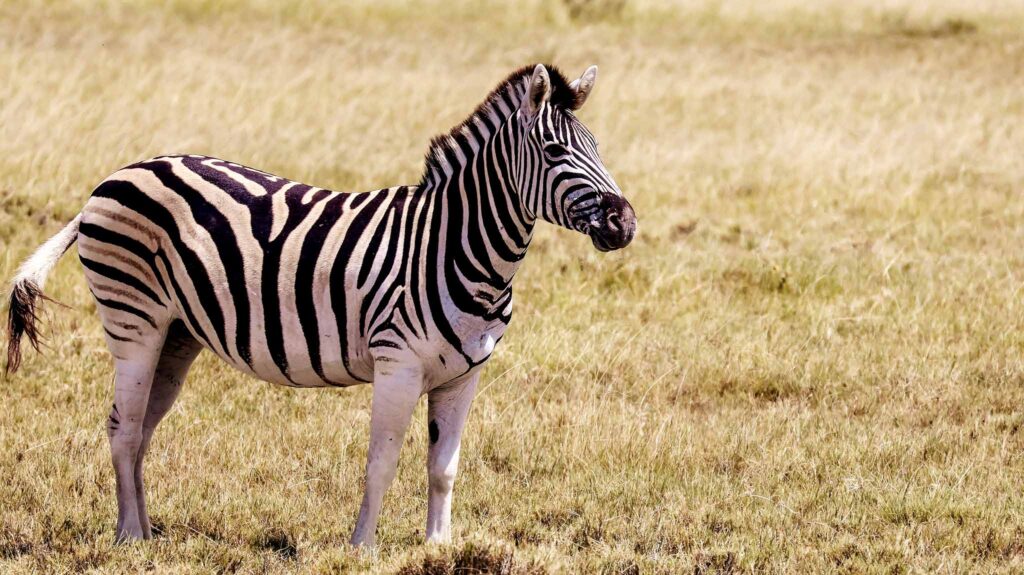
At sunset, the light softened, turning their stripes into shades of copper and shadow. The world slowed. Even the wind seemed to pause.
And for a moment, it was just them, the earth, and the long journey still ahead.
The Makgadikgadi zebra migration may not have the fame of its East African counterpart, but in many ways, it is more remarkable.
It is less predictable. Less crowded. More fragile.
It is also one of the last great migrations in southern Africa that remains largely intact, a testament to Botswana’s conservation efforts and the vast, unfenced wilderness that still allows animals to move freely.
In a world increasingly carved into boundaries, this kind of movement feels almost rebellious.
Travel often promises spectacle. Special moments. Bucket-list experiences. Without a doubt, sometimes, the most powerful encounters are the quiet ones. A small herd of zebras crossing a salt pan at dusk. The sound of hooves on hardened earth. The realisation that you are watching a journey that has unfolded for generations, largely unseen.
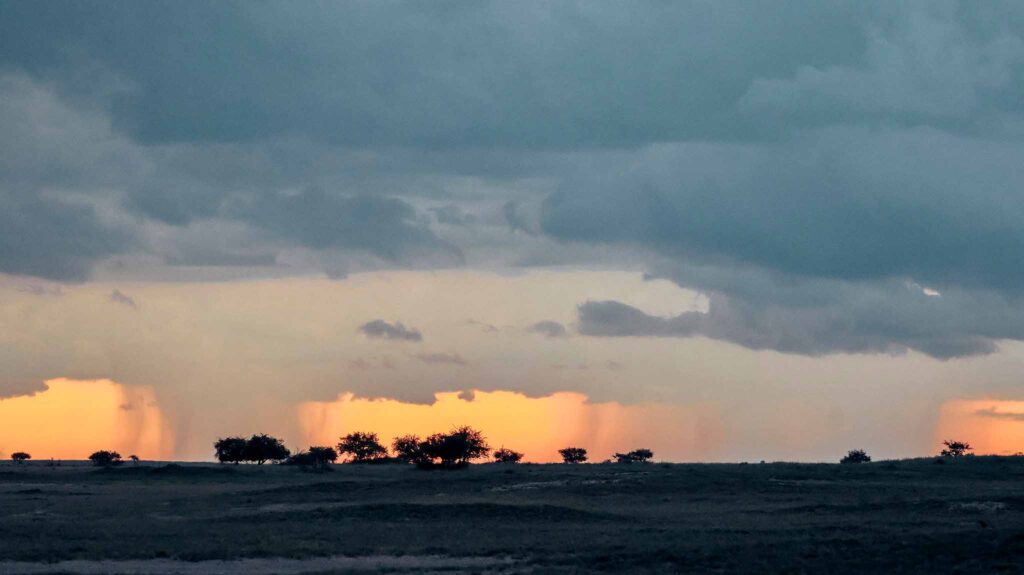
The Makgadikgadi zebra migration isn’t about drama. It’s about endurance. Rhythm. Continuity.
It’s about following the rain, trusting the land, and moving forward even when the path disappears into white nothingness. And somewhere out there, between the pans and the Delta, the stripes continue their ancient pilgrimage.
Uniquely, when the rains become the Zebras‘ map!