

In this story
Chasing Chameleons: A Wild Garden Photography Adventure
If someone told me I’d be spending my Sunday photographing chameleons in a wildly untamed garden full of fynbos, I’d have said, “Where do I sign up?” Luckily, a dear friend of mine, a passionate nature lover, invited me to her enchanting garden paradise — a place where plants grow like they’ve had five shots of espresso and chameleons are regular residents.
Of course, I was thrilled! Who wouldn’t be? Photograph chameleons? Yes, please.

I imagined peaceful moments behind the lens, soft light dancing on dew-covered leaves, and cooperative little chameleons striking a pose.
Reality? Not so peaceful. But oh, so worth it.
The Challenge of Photographing Chameleons
Let me start by saying: chameleons are not camera hams. They’re shy, well-camouflaged, and move with this slow, hypnotic glide that’s both adorable and infuriating when you’re trying to get them in focus.
Armed with my zoom lens, I crouched in the wind, my camera wobbling like jelly on a plate. I took 105 photos. Guess how many I kept?
And those 20 are not going to win any wildlife photography awards anytime soon. But they do tell a story — a story of patience, persistence, and a little bit of photo-induced panic.

Nature: The Best Kind of Therapy
Being in this lush, wild space reminded me of why I fell in love with nature photography in the first place. The fynbos rustled with life. Birds zipped by. Water trickled from hidden features. And then there were the stars of the show: the chameleons.
The last time I saw a chameleon in the wild, I was ten years old. It was in Durban, tiptoeing across our garden fence. I remember it clearly — its delicate gait, its roving eyes, and the way it seemed to embody calm.
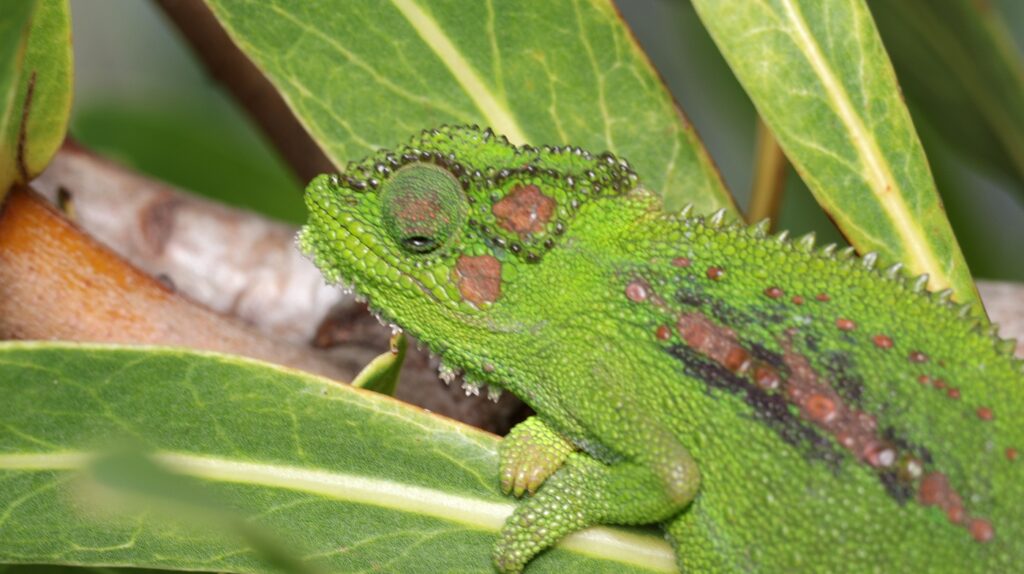
So, when I spotted my first Cape Chameleon nestled among green leaves, my heart leapt. And yes, I got emotional. These creatures are unbelievably agile, yet so slow and deliberate.
They’re mesmerizing to watch — like tiny zen masters with fancy colour-changing suits.

My Camera Was Confused — And So Was I
Trying to photograph chameleons in a garden bursting with green is like playing hide-and-seek with a ghost in camouflage. My camera kept hunting for focus. It was practically yelling, “There’s too much green!”
So, I switched to manual focus. Which was great… until I remembered I need to wear glasses now. Photographing chameleons without them was like trying to paint with my eyes closed.
Still, even with blurry fingers and wind-blown hair, I loved every minute. The challenge made every decent photo feel like a tiny victory.
Why Chameleons Change Colour
Contrary to popular belief, chameleons don’t change color to blend into their surroundings (although it helps!). They mostly change color to communicate. Mood, health, stress levels, and temperature all affect their colors.
In this garden, I watched one change from a leafy green to a dusky brown as it moved from sunlit leaves to a shaded branch—Nature’s slow-motion light show.
My camera didn’t quite know how to keep up, but I was completely hooked.
10 Fun Facts About Cape Chameleons
…and why they’re the quirkiest garden companions!
Cape Chameleons Are Endemic to South Africa
That means they’re found only in this part of the world — mostly around the Western Cape. So if you spot one, you’re witnessing something truly special.
They Have Zygodactylous Feet
Which is a fancy way of saying their toes form a mitten-like grip, perfect for climbing. Think: gecko meets acrobat.
Their Eyes Work Independently
Each eye can move separately. So while one eye watches you, the other might be scanning for lunch. It’s weird and wonderful.
Their Tongue is Longer Than Their Body
Need to grab a snack across the branch? No problem. Their sticky tongue can shoot out faster than you can say “photo opportunity!”
They’re Surprisingly Expressive
Colour shifts indicate mood. Bright green and turquoise? Happy. Dark and muted? Maybe cold, stressed, or in a deep conversation with a leaf.
They Have Built-in Sunglasses
Sort of. Their eyes have cone-shaped lids with just a small opening for the pupil, helping them focus and avoid glare. Stylish and practical.
They Don’t Blink
Instead of blinking, they clean their eyes by rolling them around in their sockets. It’s as strange to see as it sounds. Each eye is on its own mission. So they turn around at all angles constantly, unlike ours! Try focusing on two busy eyes!
They Prefer a Quiet Life
Chameleons are solitary creatures. So don’t expect them to throw a party. They’d much rather chill alone on a sunny twig.
They’re Masters of Stillness
They can freeze mid-step if they feel watched. It’s like playing musical statues with a creature that takes it very seriously.
They’re Vulnerable
Habitat loss, pesticides, and the pet trade pose significant threats to Cape Chameleons. So if you find them in your garden, treat them with care. They’re nature’s little miracles.
Final Thoughts: A Few Good Shots, A Lot of Joy
Sure, I came home with only a handful of “good” photos. But I also came back full of wonder, laughter, and a deeper respect for these incredible animals.
Photographing chameleons in a wild garden isn’t about perfection. It’s about slowing down, observing, and reconnecting with nature. Even if your camera doesn’t cooperate. Even if your back hurts from crouching. Even if your subject disappears into a leaf and refuses to come out.

It’s magical.
So, if you ever get the chance to photograph chameleons in the wild — say yes. Bring your zoom lens. Pack your patience. And don’t forget your glasses.
You’ll thank me later.


Written by
Travel blogger, photographer and Africa travel specialist based in Cape Town, South Africa. More about me
7 comments
-
-
I love your love for nature! What gorgeous chameleons! Long may the thrive! Thank you for sharing!
-
Absolutely love!
-
Absolutely love this!! Thanks for sharing Lauren!
-
Absolutely love this!! Chameleons are so fascinating!! Thanks for sharing Lauren!
-
What an interesting article. Thank you for bringing these little creatures to my attention! I have never before taken any notice of them, but you have captured them beautifully ❤️
-
Love! Love! Love! <3 Just absolutely stunning. I think i might just be a chameleon, looking at your quirky list. 😀


Absolute wonders! I’m always thrilled to find them! So elusive and few these days! Well done, beautiful photography!